
Name the hard moments
Look at the times when the routine breaks down: getting dressed, meals, mobility, appointments, evenings, sleep, or the stretch between one family visit and the next.
When the day no longer holds together on its own, create dependable support around the routines your loved one knows and the family work that has become too much to carry alone.
Talk with our care team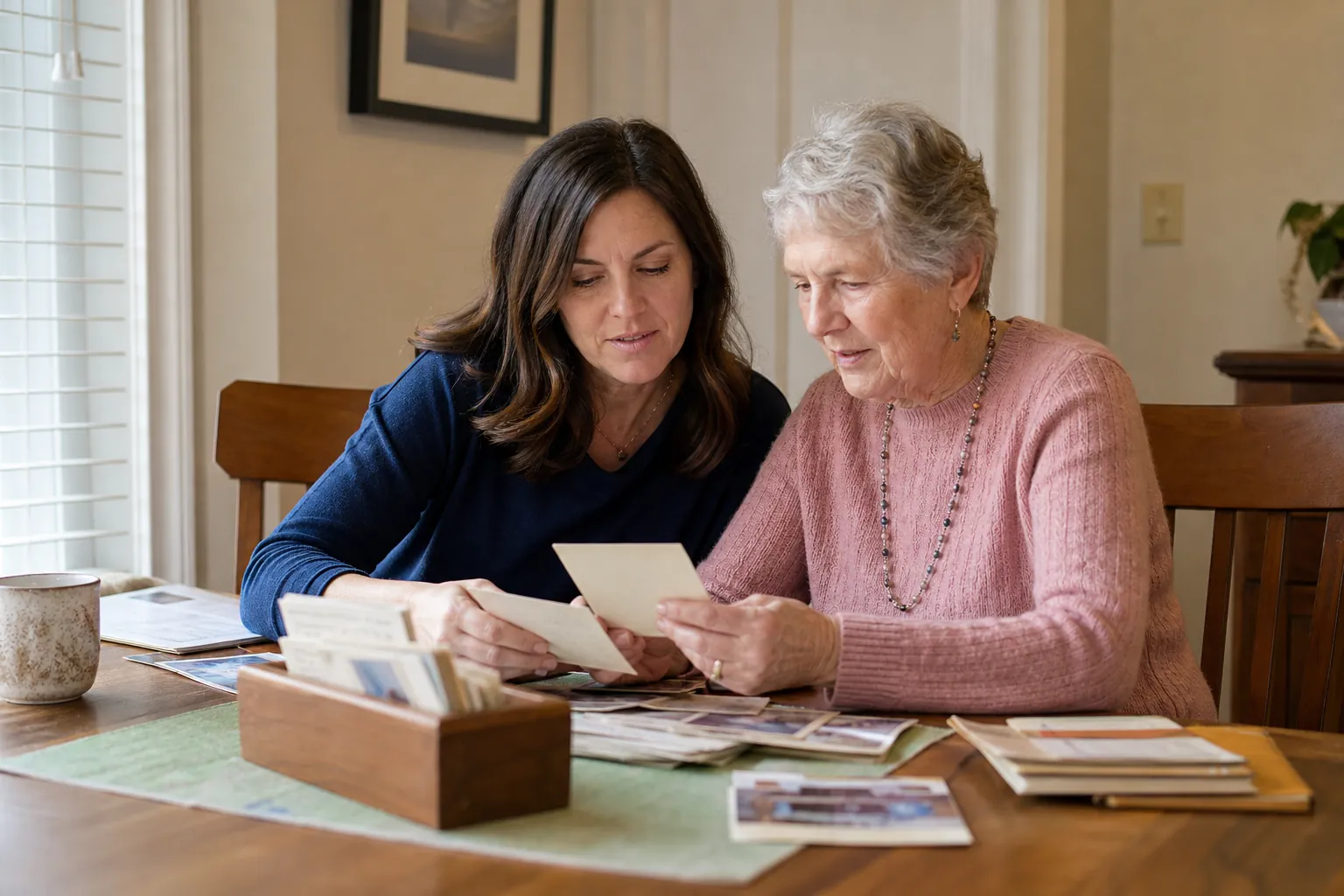
Alzheimer’s changes a household one ordinary moment at a time. A familiar meal takes more preparation. A morning routine needs more prompting. A spouse starts listening for movement at night. An adult child becomes the person holding appointments, calls, supplies, and the next decision.
OPA starts with that real day, not with a generic list of tasks. Together, we can talk through the routines that matter, the help a family is already providing, and the support that could make the home feel more manageable.
See how care startsThe first conversation can turn a vague sense of strain into a practical picture of where support would help most.
Look at the times when the routine breaks down: getting dressed, meals, mobility, appointments, evenings, sleep, or the stretch between one family visit and the next.
Share the person’s usual preferences, rhythms, favorite activities, and the small details that help them feel respected and settled at home.
OPA reviews the support needed, the people involved, and the timing before confirming what care can be arranged, so important details do not stay with one exhausted relative.
Families often adapt for a long time before they call anyone. A partner covers the daily gaps. An adult child adds errands before work and visits after dinner. Relatives trade phone calls about meals, medications, appointments, and whether the person seemed more confused today. Each task can look small in isolation. Together, they can become a full-time coordination role with no clear backup.
The need for help is not a sign that a family has failed. It can be a way to protect the relationship around the care. The goal is to give the person living with Alzheimer’s practical, respectful support at home while giving family members a clearer way to share responsibility.
Every household is different. The useful question is not whether the diagnosis has reached a particular stage. It is whether the current plan gives your loved one the support they need and gives the family enough structure to keep going.
A care plan works best when it begins with the person’s life, not just a list of things that need to get done. Tell us about the morning routine that still matters, favorite music, a preferred meal, the way your loved one likes to be addressed, the people they feel comfortable with, and the time of day that tends to go best. These details help keep assistance from feeling impersonal.
OPA’s personal care can support bathing, dressing, grooming, mobility, meal preparation, light housekeeping, errands, medication reminders, transportation, and companionship. The right combination depends on what the person can do comfortably, what family is already handling, and what will make the day safer and more sustainable. Explore personal care at home for a fuller picture of that support.
Meaningful days do not need to be busy days. A familiar walk, folding towels, watering plants, listening to music, looking through photographs, helping prepare a meal, or sitting with someone who does not rush the conversation can all support connection. For ideas that can be adjusted to the person’s current ability, visit the Knowledge Center.
Memory changes affect more than the person’s routine. They also create an invisible layer of work for the family: appointments to remember, notes to share, safety concerns to discuss, supplies to replace, and questions that need to reach the right clinician. Often, one person becomes the family integrator, holding those moving parts together while everyone else assumes someone has the details.
That role deserves a plan. The Care Coordination Grid gives families a free shared place to track responsibilities, appointments, important contacts, and the next handoff. It does not replace clinical directions. It makes it easier for family members and caregivers to see what has changed, who is handling what, and what still needs attention.
Clear handoffs can be especially valuable when a loved one has a routine that changes across the week. If one family member covers mornings, another visits on weekends, and a caregiver supports certain hours, no one should have to reconstruct the plan from scattered texts or memory. A visible plan protects the person at the center of it and reduces the chance that one relative becomes the only source of truth.
Home care can make daily life more manageable, but it does not replace medical assessment or treatment. Contact the person’s clinician for a new or sudden change in confusion, behavior, walking, eating, sleep, pain, breathing, alertness, or medication needs. Call 911 for an immediate emergency. If a hospital, physician, nurse, or therapist has given instructions, bring them into the planning conversation so daily support can align with the clinical plan.
When licensed care is part of the documented need, OPA provides nursing care at home from licensed RNs and LPNs, supervised by a registered nurse. Learn about skilled nursing and discuss the person’s specific care plan with the treating team.
Some families need a few dependable hours during the day. Others need help through harder mornings and evenings, a regular companion so a spouse can leave the house, or broader coverage after a health change. When support is needed across more of the day and night, live-in care or 24-hour home care may be worth discussing. If the strain is concentrated after bedtime, overnight home care can help a family focus on the hours that are disrupting rest and safety.
OPA does not ask a family to choose a label before anyone understands the situation. We start with the person’s routines, the household’s pressure points, and the support already in place. Then we talk through what may fit, what information is needed before a schedule can be confirmed, and how caregivers and family can communicate clearly.
You do not need a finished care plan before calling. A few notes are enough: what has changed, which times of day are hardest, what help the person accepts, who is currently involved, and how soon support may be needed. If there have been recent falls, hospital visits, medication changes, or new clinician instructions, have that information ready as well.
It can also help to invite the family member carrying most of the coordination into the conversation. Their view of the daily routine, the missed handoffs, and the moments that create the most worry will help make the discussion specific. The aim is a plan that reduces uncertainty, respects the person’s life at home, and gives the family a steadier way forward.
Support may include personal routines, meals, mobility, companionship, household tasks, transportation, and helping the family keep a predictable day. The right plan depends on the person’s needs, preferences, and the help already in place.
Families often start the conversation when one person is carrying too much, routines are becoming harder to manage, safety concerns are growing, or a spouse or adult child no longer has dependable backup. You do not need to wait for a crisis to talk through the options.
No. Home care can support the daily routine, but new symptoms, sudden changes in confusion or behavior, medication questions, and treatment decisions belong with the person’s clinician. Call 911 for an immediate emergency.
Start with the day your loved one is having now: the routines that are difficult, the times of day that feel least safe, the help the person accepts, and who is currently coordinating everything. OPA can use that picture to discuss what support may fit.
Talk through what has changed and the dependable support that could help your loved one stay at home with more structure around the day.