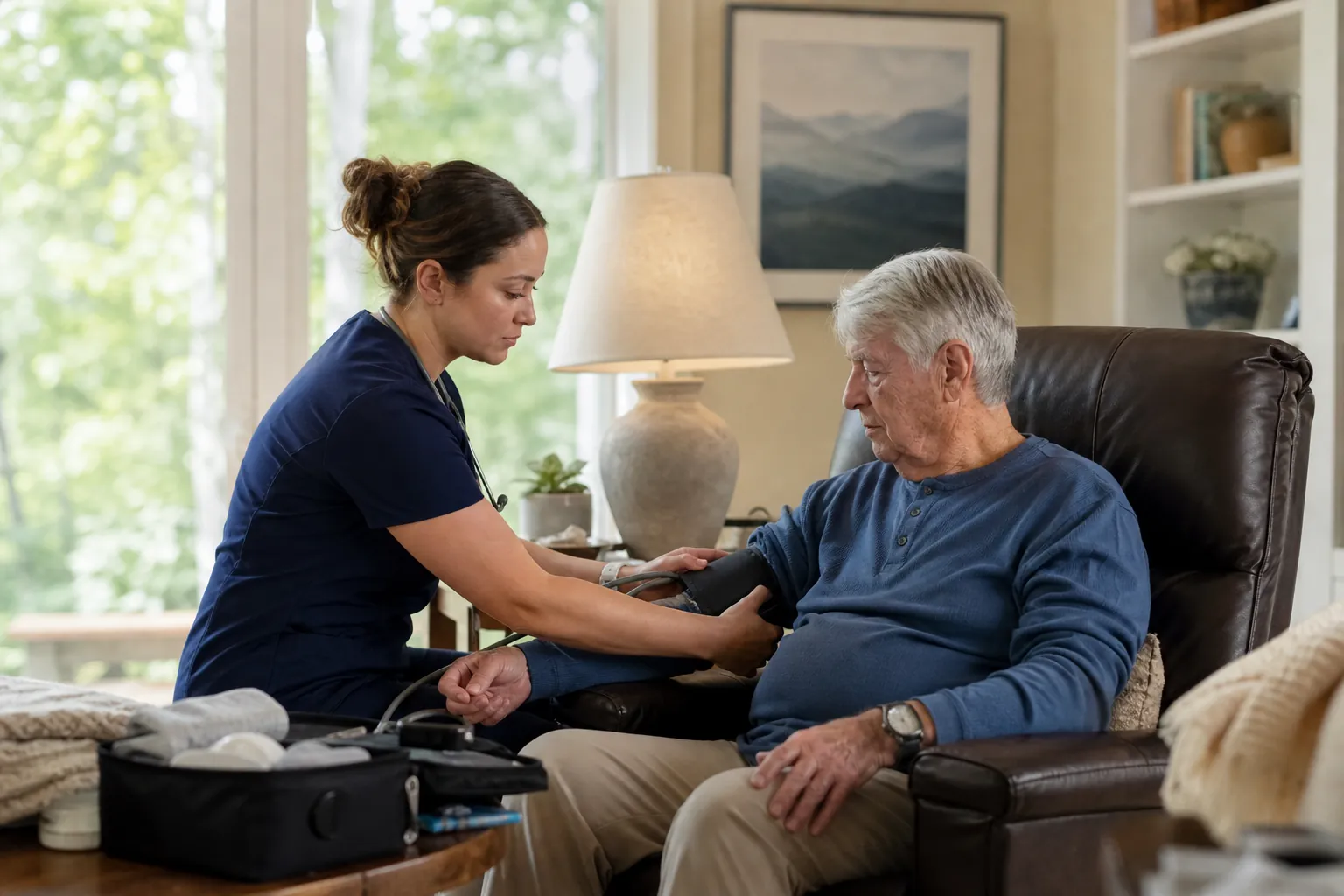
Home can be an appropriate setting for some people with complex needs when the clinical plan, trained support, equipment, and follow-up are in place. The treating team should guide that decision.
Start with the clinical plan
Ask what care is ordered, who may provide it, how often it is needed, and what changes require a call or emergency help. Request written instructions before discharge.
Check household readiness
Discuss equipment, supplies, access to the home, power needs, medication storage, and the people who will be present. Families should be honest about what they can manage.
Plan communication
Name the family contact and make a list of the clinical contacts. Keep the current instructions together and share updates through the agreed route.
Use practical support where it fits
OPA Home Care can discuss everyday support around meals, routines, and household coordination while licensed clinicians manage medical care.