







Choosing where to recover after a major medical event: a stroke, a complex surgery, or a debilitating illness: is one of the most consequential decisions a family in Atlanta will ever make. Frequently, the choice narrows down to two distinct paths: a traditional skilled nursing facility (SNF), commonly known as a nursing home, or skilled nursing home care provided in the comfort of your own residence.
At OPA Home Care, we understand that this isn't just a clinical decision; it is a deeply personal one that affects the dignity and emotional well-being of the patient. While nursing homes have long been the default for post-acute care, the landscape is shifting. Families are increasingly realizing that clinical excellence doesn't have to happen in an institutional setting.
Defining the Scope: What is Skilled Nursing?
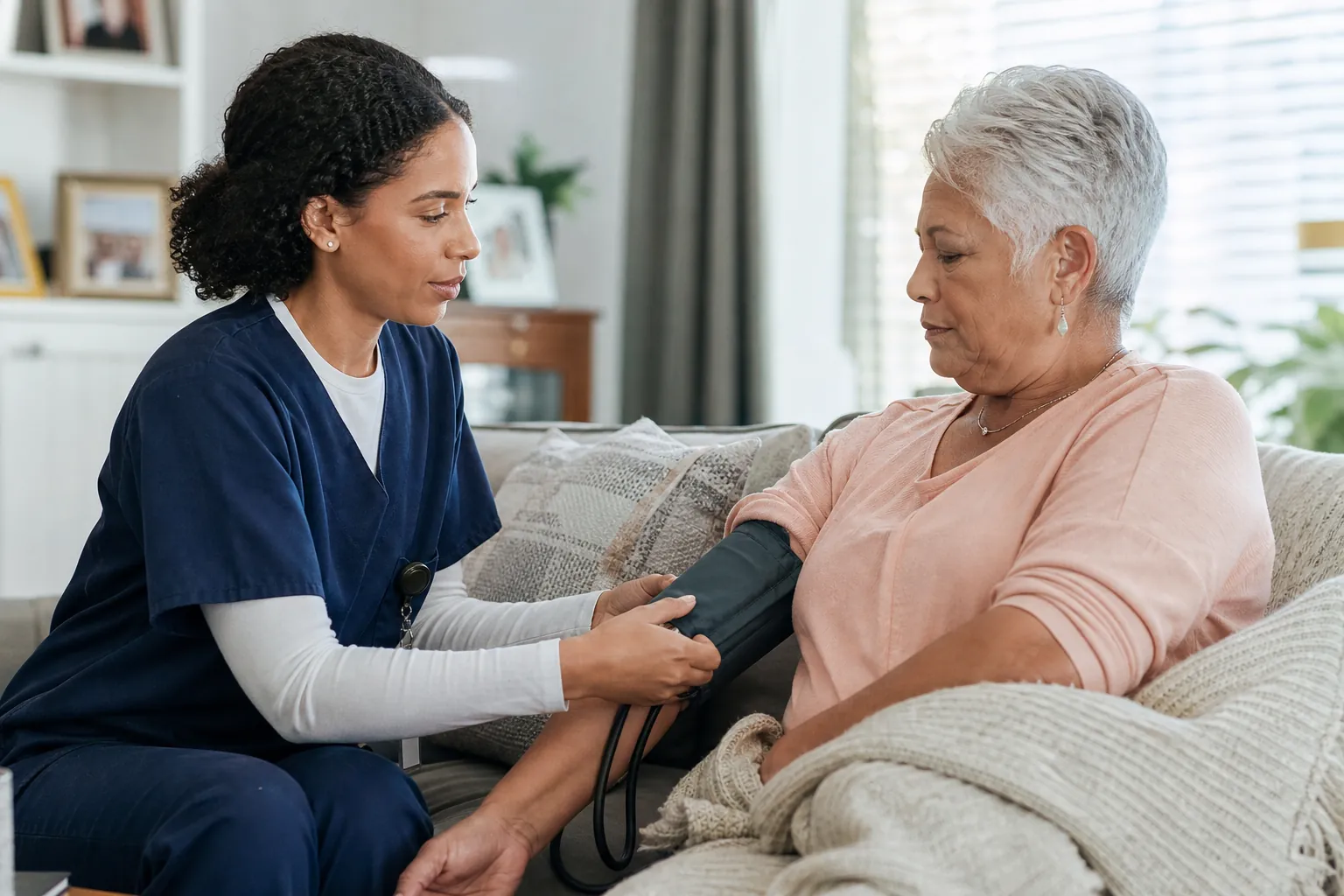
Before comparing the two, it is important to define what "skilled nursing" actually entails. Unlike general caregiving, which focuses on activities of daily living (ADLs) like bathing and dressing, skilled nursing services Georgia involves medical care that can only be performed by licensed healthcare professionals: Registered Nurses (RNs) or Licensed Practical Nurses (LPNs).
This includes:
- Complex Wound Care: Managing surgical incisions or pressure ulcers.
- Tube Feeding (G-Tube): Managing and maintaining gastrostomy tubes.
- Tracheostomy Care: Specialized cleaning and maintenance of airway sites.
- Ventilator Support: Monitoring and adjusting respiratory equipment.
- Intravenous (IV) Therapy: Administering medications or fluids directly into the bloodstream.
The Nursing Home Model: 1-to-Many Care
A Skilled Nursing Facility (SNF) is a centralized hub of medical care. The primary benefit of an SNF is 24/7 onsite access to a medical team and intensive rehabilitation. For patients who are medically unstable or require 3-4 hours of active physical and occupational therapy every single day, the structured environment of a facility can be beneficial.
However, the "institutional" nature of these facilities comes with a significant trade-off: the patient-to-nurse ratio. In many Georgia facilities, a single nurse may be responsible for 15 to 20 patients at a time. This "1-to-many" ratio means that care is often reactive rather than proactive. If a patient needs immediate attention for a non-emergency issue, they must wait their turn in a long queue of competing needs.

The OPA Home Care Advantage: 1-on-1 Focus
In contrast, skilled nursing home care flips the script. When an OPA Home Care nurse enters your home in the Atlanta MSA, you are their only patient. This 1-on-1 ratio is the gold standard for recovery.
Research indicates that while mortality rates between home care and nursing homes are comparable, the level of personalized attention at home often leads to higher patient satisfaction and a greater sense of agency. In a home setting, the nurse isn't just checking a box on a chart for 30 people; they are observing your specific environment, monitoring your unique reactions to medication, and providing education to your family in real-time.
Clinical Expertise You Can Trust
Many families worry that home care cannot handle "heavy" clinical needs. At OPA Home Care, we bridge that gap. We specialize in high-acuity cases that other agencies might shy away from. Our team is trained and experienced in:
- G-Tube Management: Ensuring proper nutrition and preventing infection.
- Trach Care: Providing life-sustaining airway management with precision.
- Post-Surgical Recovery: Monitoring for complications after major procedures.
Reliability in the Atlanta MSA: The 99% Report Rate
One of the biggest hurdles in home health is reliability. If a nurse doesn't show up at a facility, the facility shifts another staff member. If a nurse doesn't show up at a home, the family is left in a crisis.
Stephen Deason, Founder & CEO of OPA Home Care, built this company on the foundation of radical reliability. Across the Atlanta Metropolitan Statistical Area (MSA), OPA Home Care maintains a 99% report rate. This means that when we commit to a shift, we show up. We utilize integrated systems like AxisCare to ensure that our scheduling is airtight and our communication with families is transparent.

Comparing the Costs and Outcomes
From a financial perspective, home-based recovery is often more efficient. National data suggests that home-based recovery can result in $8,000-$9,000 less in Medicare payments compared to SNF stays. While cost shouldn't be the only factor, the ability to receive high-level clinical care without the "facility premium" allows families to allocate resources toward long-term wellness.

However, the risk of readmission is a real concern. Studies show that home discharge can have a slightly higher readmission rate if the home environment is not properly managed. This is why OPA Home Care focuses so heavily on the transition period. We recommend reading our guide on what happens after hospital discharge to understand how we mitigate these risks through intensive early-stage monitoring.
Why "Home" Matters for Healing
There is a psychological component to recovery that cannot be quantified in a medical chart. A nursing home, no matter how high-end, is still an institution. It has a schedule that isn't yours, food that isn't yours, and noises that aren't yours.
Healing at home allows for:
- Better Sleep: Essential for neurological and physical recovery.
- Familiar Surroundings: Reducing the risk of "hospital delirium," especially in elderly patients.
- Pet Therapy: The emotional boost of being with a beloved pet.
- Customized Nutrition: Eating what you like, when you want it, which is vital for patients with a G-tube or specific dietary restrictions.
Specialized Training and Standards
We don't just "hire and hope." OPA Home Care partners with CareAcademy to ensure our nurses and caregivers are constantly updating their skills. Whether it’s the latest in infection control or advanced mobility techniques, our team stays at the forefront of the industry.

Furthermore, our affiliation with the Georgia Association of Community Care Providers (GACCP) ensures that we are aligned with the highest state standards for skilled nursing services Georgia. We aren't just a local business; we are part of a professional network dedicated to elevating the quality of life for seniors across the state.
Making the Right Choice for Your Family
If your loved one is currently in an Atlanta hospital and you are weighing your options, ask yourself these three questions:
- Is the home environment safe? Can the home be modified (ramps, grab bars) to accommodate the patient?
- Does the patient require 1-on-1 attention? If the patient is prone to falls or has complex clinical needs like a tracheostomy, the "1-to-many" ratio of a nursing home may be insufficient.
- Is reliability a priority? With OPA's 99% report rate, you can rest assured that the clinical care promised is the clinical care delivered.
The transition from hospital to home is a vulnerable time. You don't have to navigate it alone. Whether you need short-term care to get over a hurdle or live-in care for long-term stability, OPA Home Care is equipped to provide the clinical expertise of a nursing home with the compassion and privacy of your own living room.
Take the Next Step
Recovery is a journey, and the setting defines the pace. If you are looking for skilled nursing home care in the Atlanta area that prioritizes clinical excellence and 1-on-1 attention, we are here to help.
Contact OPA Home Care today to discuss your specific needs and learn how we can bring the hospital's expertise to your front door.
Visit our Contact Page or call us directly to speak with a care coordinator.