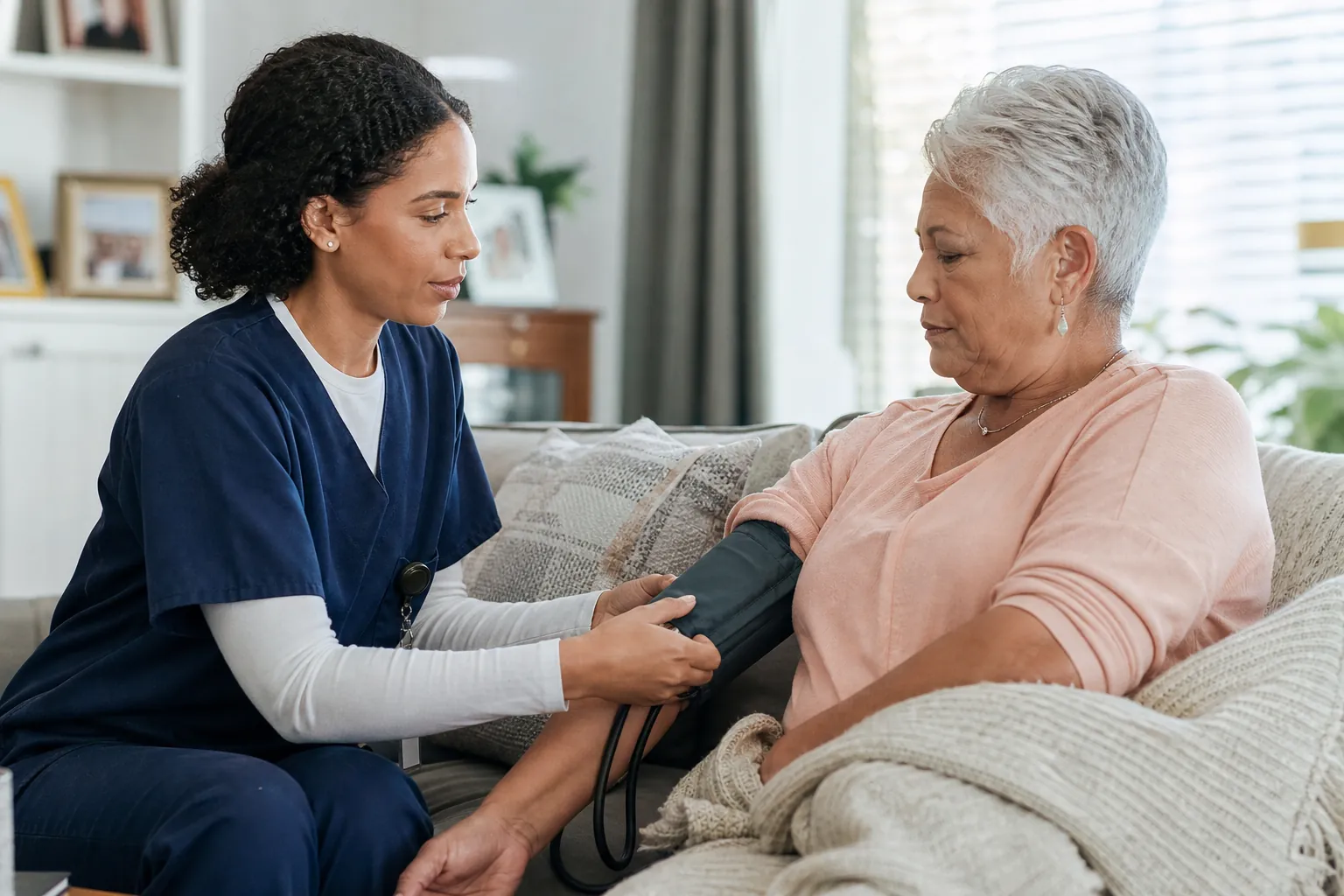

When a loved one has a feeding tube, tracheostomy, or another complex clinical need, “home or facility?” can feel like an impossible question. It should not be answered by a generic verdict. The safest and most workable setting depends on the individual’s condition, physician orders, training, available caregivers, home setup, equipment, and access to follow-up care.
This article is a planning tool, not a substitute for discharge teaching or clinical advice. Your hospital and clinical team should provide patient-specific instruction before a transition home. The NHS notes that people and caregivers who go home with a tracheostomy should be taught care before discharge and supported afterward.
Start with the care plan, not a location
Ask the discharging clinician to describe what the person needs across a full day and night. Which tasks require a licensed professional? Which tasks can be performed by trained family members or support caregivers? What needs to be demonstrated before discharge? Who will provide follow-up for respiratory, nutrition, medication, and equipment questions?
For G-tube care, MedlinePlus discharge guidance highlights the importance of training on routine care, feeds and medications, and when to call the clinical team. The point is not to master a procedure from an article. It is to make sure the family has the right training, written instructions, and contacts for this specific patient.

Seven questions for the discharge conversation
- What exact care tasks are ordered, and who is permitted to perform them?
- What must a family caregiver demonstrate before discharge? Ask for hands-on teaching and a chance to ask questions.
- What equipment, supplies, and maintenance are required? Confirm delivery, replacement, cleaning instructions, and whom to call if something is missing or not working.
- Is a backup power or emergency equipment plan required? Make sure the plan is written and understood.
- What changes require a call to the clinical team, and what requires emergency services? Keep these instructions where caregivers can find them.
- Who follows up after discharge? Write down the names and numbers for respiratory, nutrition, primary care, nursing, and other relevant teams.
- What level of support is realistic at home? Discuss the actual availability, training, rest needs, and limits of family and paid caregivers, without assuming one setting is automatically better.
Prepare the home as a care environment
A home transition needs a designated clean workspace, clear access for necessary equipment, a place for supplies, and a plan for who is present at different times. Families should also think through transportation, follow-up appointments, communication between helpers, and power-loss planning if clinically relevant. A written binder or shared note can reduce the chance that essential information is lost in separate conversations.
Know the escalation plan
Do not use a general web article to decide what to do in an emergency. Follow the patient’s own care instructions. Difficulty breathing requires emergency action. MedlinePlus also identifies concerns such as significant bleeding, worsening pain, abdominal swelling, a displaced tube, leakage, redness or irritation around a tube site, or possible blockage as reasons to contact the clinical team. The right threshold and response for any individual must come from their treating clinicians.
Where OPA may fit
OPA provides nursing care at home from licensed RNs and LPNs, supervised by a registered nurse. We do not make a blanket claim that every complex case is appropriate for home. If your family is considering a transition, review skilled nursing support and talk with our team about the questions that need to be answered before a plan begins.
Clinical guidance for the home plan
The MedlinePlus's PEG-tube discharge guidance identifies blockage, leakage, and a tube coming out as problems that need clinical guidance. Use this guidance to prepare questions for the treating team; the person's own clinical instructions determine the care plan.
The MedlinePlus's tracheostomy-care guidance explains the need for trained care and instructions for keeping the airway tube clean. Use this guidance to prepare questions for the treating team; the person's own clinical instructions determine the care plan.
Turn the instructions into a shared home plan
Use the Care Coordination Grid from OPA's Knowledge Center to name who handles appointments, daily routines, and the next handoff. Keep the treating team's instructions and contact details alongside the schedule. Confirm the required tasks and schedule before care starts.